

Exterior house paint must do more than look good; it needs to withstand intense UV, coastal salt and dusty summers while maintaining long-term curb appeal. Beyond design, choosing the right exterior house paint colours is a durability and performance decision.
In 2026, leading exterior paint colour trends focus on warm neutrals like beige, cream and soft light brown, alongside earthy tones such as sage green, muted blue, taupe, rust and terracotta. These shades complement Perth’s natural landscape, reflect heat better than darker colours, and age gracefully under strong sun exposure.
But trends alone aren’t enough. The best exterior paint shades for your home depends on your surface material, orientation, exposure levels and long-term maintenance goals.
This guide will help you discover the top exterior house paint colours for 2026. Additionally, you’ll get six ready-to-use palettes tailored for Perth homes a simple testing method, and expert advice for long-lasting results.
Let’s get into the paint colours that will look great – and last longer!
What Type of Exterior Paint Is Best for Perth Homes?
In Perth’s high-UV, coastal climate, the best exterior house paint is a premium 100% acrylic, UV-resistant exterior system matched to your surface and finished in a low-sheen or satin for durability.
Perth’s intense sun exposure, salt-laden coastal air, strong winds and temperature swings can cause inferior paints to fade, chalk, crack or peel prematurely. That’s why selecting the right formulation matters just as much as picking the perfect shade.
What to look for in exterior paint for Perth conditions:
When purchasing exterior paint in Perth, look for products specifically formulated for Australian UV levels and coastal exposure.
For most homes, we recommend a high-quality acrylic exterior paint that is:
- UV resistant – Protects against fading and breakdown under harsh WA sunlight.
- Mildew resistant – Important for shaded or coastal areas.
- Chalking resistant – Reduces surface powdering over time.
- Flexible & crack-resistant – Allows movement during temperature changes.
- Low VOC (optional) – Healthier for families and environmentally responsible.
Premium Australian brands such as Dulux and Taubmans formulate exterior systems specifically for harsh climates. For example, Dulux Weathershield® is engineered for UV durability and long-term colour retention in Australian conditions.
Once you’ve selected the right paint type, the next step is choosing colours that suit your home and its environment.
5 Key Factors to Consider When Choosing Exterior House Paint Colours
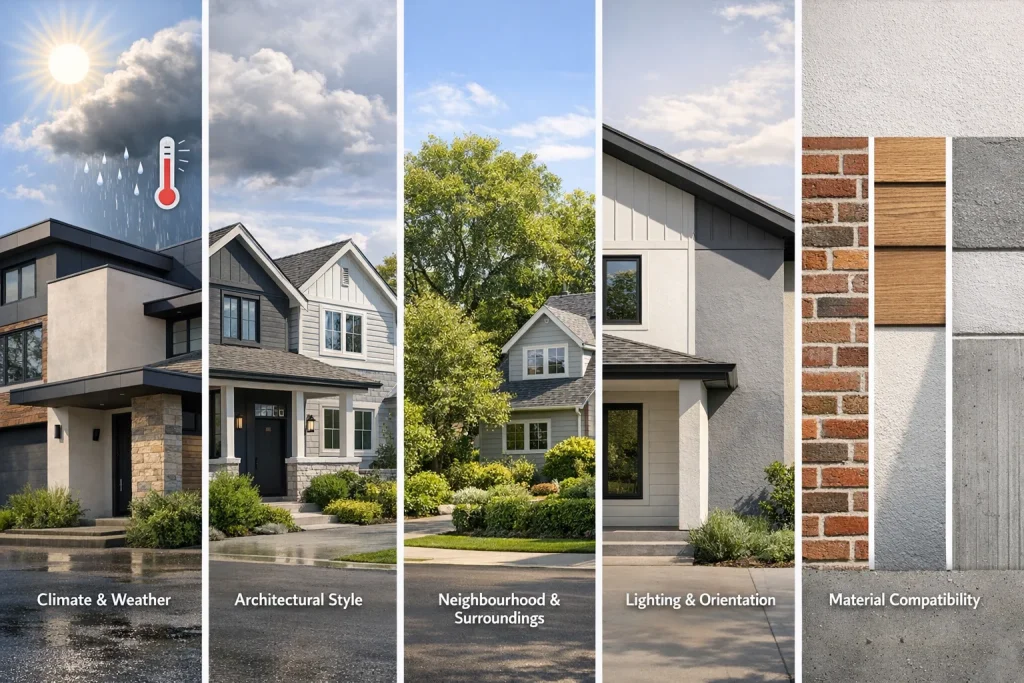
Choosing an exterior colour isn’t just about what looks good; it’s about what lasts and performs in Perth’s climate. Consider your home’s materials, sun exposure, surroundings, local rules and long-term maintenance before you pick a shade.
Below are five practical factors that will help you answer “What paint colour should I pick for my house exterior?” with confidence.
1- Your Home’s Material & Architecture
The same exterior house paint colour can look completely different depending on your surface type. Brick, render, timber and concrete all absorb, reflect and hold paint differently. And choosing the wrong system can reduce durability in Perth’s harsh climate.
Different surfaces respond differently to heat, UV and moisture:
- Dark colours absorb more heat, increasing surface movement.
- Highly porous materials require breathable coatings.
- Flexible substrates (like timber) need paints that move with them.
In Perth, this is especially important. Rendered homes in hot inland suburbs experience greater thermal expansion than shaded coastal homes, meaning colour depth and finish selection directly affect cracking and longevity.
Let’s see what works best by surface type:
Brick Homes
- Use a masonry primer followed by a breathable exterior masonry paint.
- Low-sheen finishes reduce glare and soften texture.
- Coordinate brick tone with roof and mortar for cohesion.
- Avoid sealing historic brick without assessing moisture movement; trapped moisture leads to failure.
Best for: Rich neutrals, earthy tones, warm whites.
Rendered or Cement Surfaces
- Apply a bonding primer before topcoat.
- Use elastomeric or high-quality 100% acrylic systems to resist hairline cracking.
- Choose lighter or warm neutrals to reduce heat absorption.
- Avoid very dark, non-reflective colours across large exposed walls.
Best for: Warm neutrals, greige, muted greens.
Weatherboard or Timber Homes
- Use flexible 100% acrylic exterior paint.
- Satin or low-sheen finishes improve washability.
- Prime all bare timber thoroughly to prevent tannin bleed.
- Avoid ultra-dark shades on wide boards; they highlight gaps and joints.
Best for: Coastal blues, soft greens, heritage whites.
Concrete Surfaces
- Use an acrylic latex system suitable for porous masonry.
- Ensure correct curing time before painting new concrete.
- Select breathable coatings to prevent peeling.
2- Climate & Sun exposure
Perth’s long, hot summers and strong UV mean colour and finish choices should reduce heat absorption and fading.
Practical guidelines:
- Prefer lighter tones on north-facing and very sun-exposed walls to reflect heat and reduce fading.
- Use UV-stable, high-quality exterior formulations (UV inhibitors, pigment stability) to slow colour loss.
- Where heat or direct sun is intense, consider reflective / cool paints or lighter body colours with darker accents.
3- Surroundings & Location
Your neighbourhood, landscaping and nearby homes should influence your palette choice.
Practical tips:
- Coastal homes: soft blues, muted greens, warm whites; colours that complement sea, sand and salt-weathering.
- Bushland or rural settings: earthy tones and greens blend with native foliage and hide dust/dirt.
- Inner-city/heritage streets: match the streetscape or choose a restrained accent for curb appeal without clashing with heritage guidelines.
4- Estate, Council & Heritage Restrictions
Many Perth estates and heritage areas (or strata schemes) have rules about acceptable colours.
What to do:
- Check your developer or local council guidelines before buying paint; some suburbs have pre-approved palettes (especially new estates).
- If you’re in a heritage zone, get approvals early to avoid reworks or fines.
5- Maintenance, Resale & Longevity
A colour that looks stunning on day one may cost more to maintain. Consider how often you want to repaint and how the colour affects resale appeal.
Quick considerations:
- Resale value: Neutral, timeless palettes usually appeal to buyers and increase saleability.
- Cleaning & upkeep: Light colours show dirt less in some settings; dark colours may need more frequent washing.
- Warranty & products: Choose accredited paint systems and follow manufacturer prep for warranty coverage.
With the technical factors covered, let’s explore the exterior house paint colours that are trending in Perth right now.
Popular Exterior House Paint Colours Trending in 2026
In 2026, exterior paint trends are leaning toward timeless neutrals, grounded earthy shades, and coastal-inspired tones that not only look modern but perform well in Western Australia’s climate.
Here are the most popular exterior house paint colours trending in 2026; and why they work so well for Perth homes.
➣ Modern Neutrals
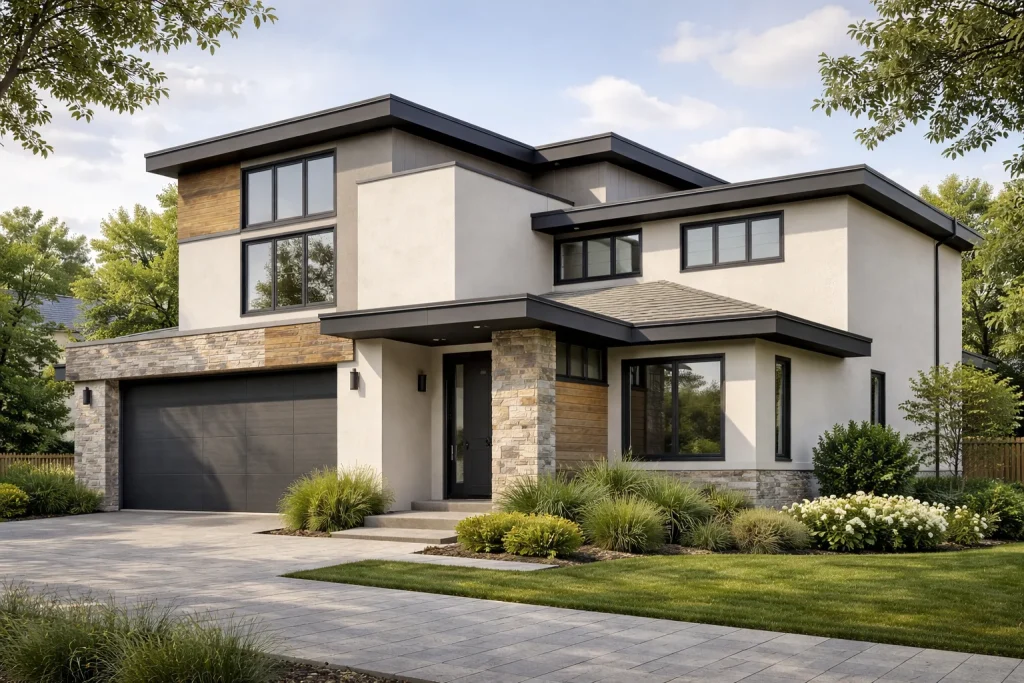
Modern neutral exterior paint colours continue to dominate Perth suburbs, especially contemporary and newly built homes.
Trending shades include:
- Dulux Tranquil Retreat – a soft warm grey that adapts beautifully to render and brick
- Monument (charcoal grey) – ideal for trims, gutters and feature elements
- Lexicon Half – a crisp, cool white for clean architectural contrast
Why they’re trending:
- Reflect heat better than very dark tones
- Complement Colorbond roofing and stone façades
- Create a sophisticated, low-maintenance look
- Age gracefully under strong sunlight
These shades pair exceptionally well with minimalist landscaping and modern architectural lines.
➣ Earthy & Nature-Inspired Tones
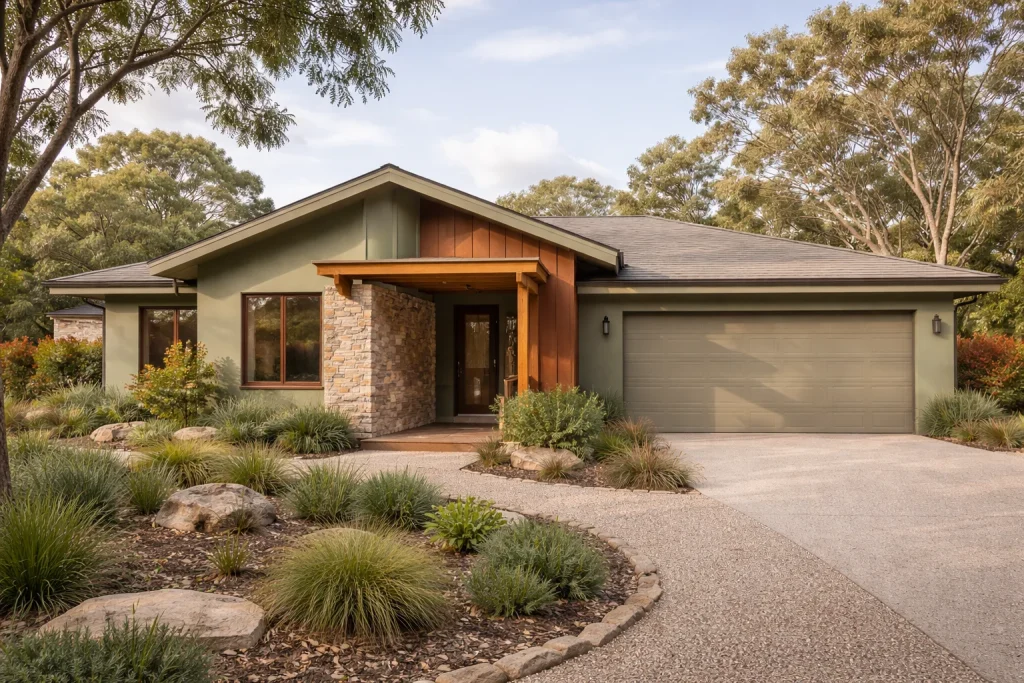
Earthy exterior paint colours are gaining strong momentum in 2026, especially in semi-rural and established Perth suburbs.
Popular earthy shades include:
- Muted sage and olive greens
- Warm taupe and greige
- Rust and terracotta accents
- Sandy beige tones
Why they’re trending:
- Blend beautifully with brick, stone and timber
- Complement native landscaping
- Offer warmth compared to cooler greys
- Conceal dust and weathering between washes
These tones are particularly effective on homes surrounded by gardens or bushland settings.
➣ Coastal-Inspired Colour Schemes
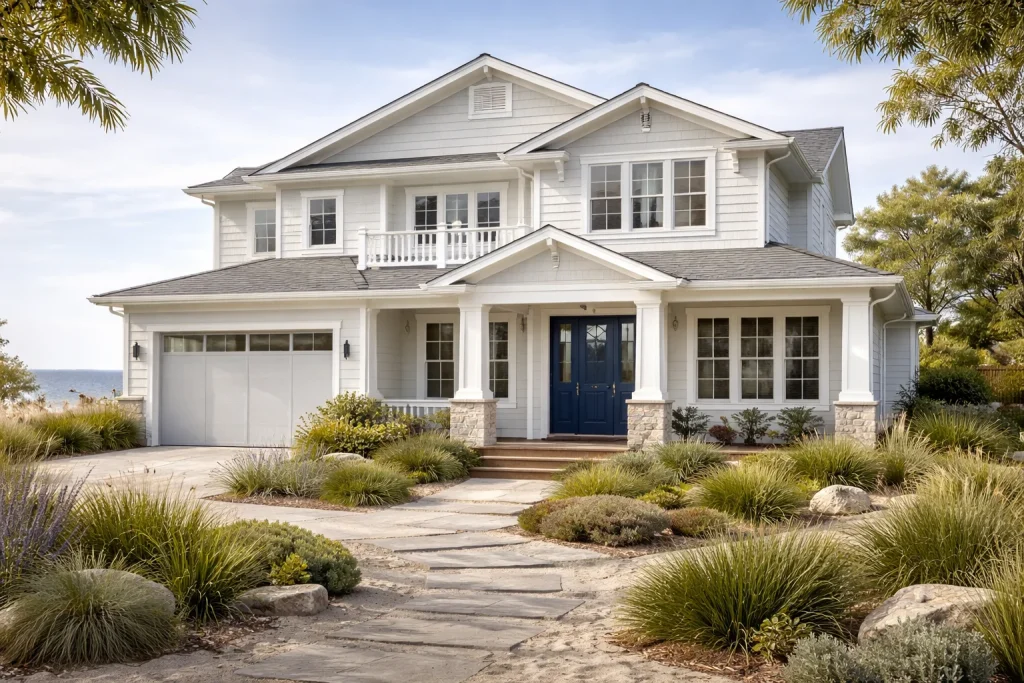
With Perth’s strong coastal influence, ocean-inspired exterior paint colours remain highly popular in 2026.
Trending coastal palettes include:
- Crisp white body with navy or deep blue doors
- Soft grey façades with bright white trims
- Muted blue or sage green accents against warm neutrals
Why they’re trending:
- Suit beachside suburbs like Fremantle, Scarborough and Cottesloe
- Enhance Hamptons and weatherboard homes
- Hide salt weathering better than flat bright whites
These schemes feel fresh without being overly bold. Perfect for homeowners wanting relaxed elegance.
Now that you know the most popular exterior house paint colours, here’s how to combine them into cohesive, real-world palettes.
6 Trending Exterior House Paint Colour Combinations
Each combination below balances heat reflection, contrast, durability and curb appeal; while staying aligned with 2026 paint colour trends.
1- Warm Neutral Modern
Warm greys reflect heat better than deep charcoal, while dark trims add definition without overwhelming sun-exposed walls. This combo handles bright light exceptionally well and complements Colorbond roofing.
Body: Dulux Tranquil Retreat
Trim: Lexicon Half
Door / Feature: Monument
Best for: Rendered homes, modern builds, minimalist designs
2- Coastal White & Navy
White reflects sunlight and keeps façades cooler, while navy adds depth without excessive heat absorption. Ideal for Fremantle, Scarborough and other seaside locations.
Body: Crisp warm white
Trim: Bright white
Door / Feature: Deep navy or charcoal
Best for: Weatherboard homes, Hamptons styles, coastal suburbs
3- Soft Greige & Charcoal Contrast
Greige avoids the harshness of cool grey and hides dust well. Charcoal trims frame the home without dominating sun-facing walls.
Body: Soft greige (grey-beige blend)
Trim: Warm off-white
Door / Feature: Deep charcoal
Best for: Brick and contemporary façades
4- Muted Sage with Timber Accents
Green tones blend naturally with established gardens and soften strong architectural lines. They also conceal light weathering between cleans.
Body: Muted sage green
Trim: Creamy white
Door / Feature: Natural timber stain
Best for: Garden-surrounded homes, semi-rural properties
5- Earthy Taupe & Terracotta Feature
Earthy bases stay timeless and complement native landscaping. Terracotta adds personality without overpowering the façade.
Body: Warm taupe
Trim: Soft white
Door / Feature: Terracotta or rust
Best for: Homes with brick, stone or Mediterranean influence
6- Contemporary Charcoal with Light Contrast
Using charcoal strategically (instead of ultra-dark tones across large surfaces) prevents overheating while maintaining a bold, high-end look.
Body: Mid charcoal (not ultra-dark)
Trim: Warm white
Door / Feature: Muted green or matte black
Best for: Modern architectural homes
Before committing to any exterior house paint colour combination, proper on-site testing is crucial.
How to Test Exterior Paint Colours Before Committing
Do not rely on a small swatch or a brochure. Do this on-house test method to see how colours perform in real light, at different times and against your materials.
Quick testing rules:
- Test at least two locations — a north-facing and a south-facing wall (or an area with different exposure).
- Make each patch 1m² — big enough to read at a distance and reveal texture effects.
- Use final coat only — apply the exact primer + paint system you’ll use (colour can change with different primers).
- Label & date each patch — record product name, brand and day/time applied.
- Photograph at 3 times of day — morning (9am), mid-afternoon (3pm) and evening (7pm) — include a close shot and a distant shot.
- Wait 48–72 hours for full cure — sheen and pigment stabilise after the paint dries fully.
- Record weather — note wind, humidity and cloud cover; repeat test patches if painted during unusual conditions.
Step-by-step practical checklist:
- Choose your test spots: pick a sun-exposed wall and a shaded wall (avoid areas that will be repainted differently later).
- Prepare the surface exactly as you will for the full job (clean, sand, prime) — this changes the final look.
- Apply the primer & base coat if used; let it dry as per manufacturer directions.
- Paint a 1m² patch with the final topcoat using the same roller/brush typical for the job.
- Label the patch with paint code, product and date using painter’s tape on the edge.
- Photograph the patch at 9am, 3pm and 7pm (wide and close). Save photos in a folder labelled with the colour name and date.
- Live with it for a week — inspect after a few days in different weather (sun, overcast, after a rain) and at night with streetlights.
- Compare patches side-by-side and decide — if unsure, reduce saturation or pick a slightly lighter tone.
Even with the right colour and testing method, there are still common mistakes that can affect the final result.
Common Exterior Colour Mistakes Perth Homeowners Make (And How to Avoid Them)
Avoid these frequent mistakes and your exterior will look better and last longer.
- Choosing very dark body colours for sun-facing walls
Dark colours absorb heat, increasing thermal movement and fading. Use dark colours only on shaded or smaller accent areas; choose lighter bodies for north/east walls.
- Ignoring contrast between walls, roof, gutters and trims
Low contrast can look washed out or make architectural details disappear. So, pick at least one accent (trim or door) to define features and balance the palette.
- Skipping real-world testing
Printed or digital samples don’t show sheen, texture or true tone in sun. Follow the 1m² test patch method on different exposures and photograph at multiple times of day.
- Following trends without considering maintenance or resale
Ultra-trendy or niche colours might deter buyers later or require frequent touch-ups. Balance trend with timeless neutrals for the main body and use accents for personality.
Tired of paint fading, peeling or looking wrong in just one Perth summer?
Let Professional Painters Get You a Perth-Proof Exterior Painting and Long-Lasting Finish
Choosing the right colour is only half the job. Proper testing, the correct primer and a UV-stable exterior system make the difference between a one-season repaint and a finish that lasts.
Final Touch Paint & Décor offers free colour consults, on-site test patches and eco-friendly (low-VOC) options tailored for Perth’s climate, we’ll show you how each trend performs on your façade and give a clear maintenance plan.
FAQs
- What are the best exterior paint colours for Perth homes?
Warm neutrals, muted greens, earthy coastal tones and deep charcoals perform well in Perth. They hide salt/soiling, complement native landscaping and resist harsh UV fading when paired with quality UV-stable exterior formulas.
- What is the most popular exterior colour of 2026?
For 2026, muted greens and warm, nature-inspired neutrals top trend lists. They pair well with timber and stone and are often recommended in brand forecasts and specifier palettes.
- What colour is not recommended for exterior use?
Avoid neon and ultra-bright paints for large surfaces. They fade quickly in high UV and can highlight imperfections. Use them sparingly as door or trim accents instead.
- What finish is best for exterior walls in coastal Perth?
Satin or low-sheen exterior finishes are ideal. They balance UV resistance, weatherability and cleanability. For high-traffic or timber eaves, consider semi-gloss on trims for easier cleaning.
- How often should exterior paint be refreshed in Perth?
Typical repaint your home exterior after 7–10 years for well-applied, 100% acrylic systems on weatherboard; 8–12 years for rendered surfaces. Coastal exposure, paint quality and prep affect timing.
- What exterior colours make a house look expensive?
Sophisticated, restrained palettes like deep charcoals paired with warm neutrals, monochrome schemes with crisp trims, or muted greens with timber accents. They give an elegant, high-end look without flashy hues.