
Can Exterior Paint Be Used On Concrete?
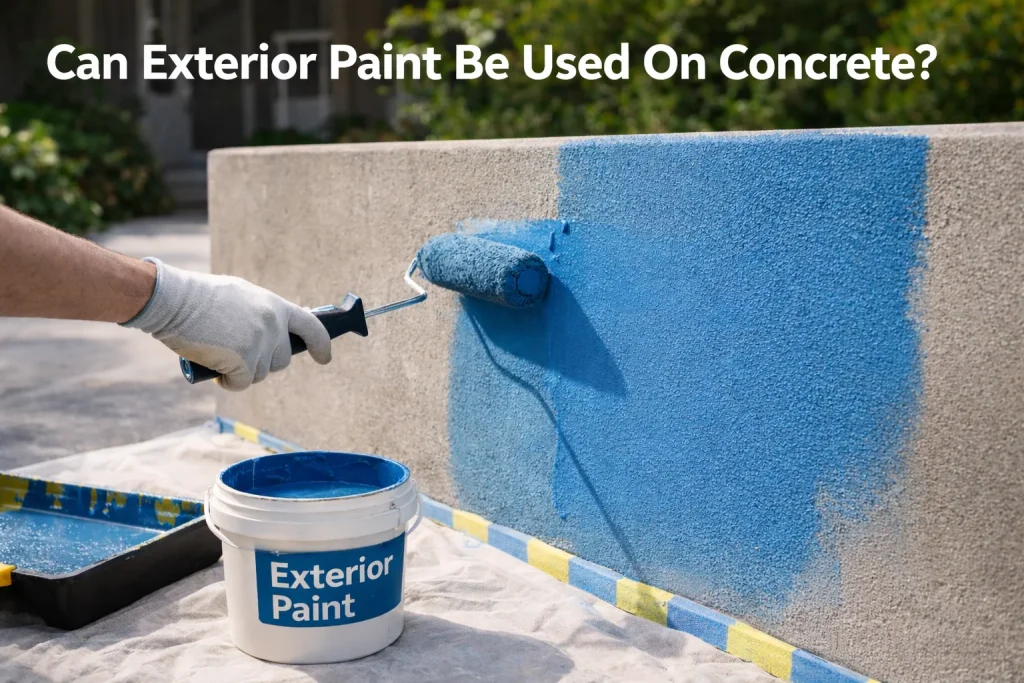
Painting on any surface provides protection, durability, and enhances visual appearance. But when it comes to concrete, here comes a question: can you really paint on a concrete surface?
The answer is yes, but it is not as simple as applying regular paint; it requires proper surface preparation, greasing, and crack repairing.
In this article, we will walk you through the types of concrete paints, their advantages, a step-by-step method for how it’s done, and how to choose the best paint for concrete.
So let’s start
Why Is Outside Concrete Paint Important?
Concrete is a porous material made from sand and gravel, which makes it absorb moisture and catch dust quickly, causing early damage. Outside concrete is important to protect the concrete walls from daily wear and tear.
Without paint, exterior concrete will be prone to mold formation, severe cracking, and freeze-thaw damage.
Types Of Paint for Outside Concrete
1- Epoxy Paint
Epoxy paint is a durable surface coating made by mixing two substances, epoxy resin and hardener (catalyst). It is commonly used on concrete, wood, and metal for a rigid and protective layer.
When applied to concrete, it forms a mechanical and chemical bond and penetrates its pores. This transforms this porous and dusty surface into a strong protective layer instead of sitting on top like ordinary paints.
2- Acrylic Latex Paint
These are water-based paints and are composed of acrylic resin, a binder, and come in 2 types: 100% acrylic and vinyl acrylic (combined with other substances).
When applied to concrete, they form strong chemical and physical bonds, creating a breathable, water-resistant layer that prevents blistering. It expands and contracts with temperature changes, ensuring long-lasting flexibility and protection.
3- Polyurethane Paint
It is characterized by a hard protective coating formed due to chemical reaction (polymerization) between two primary components: polyols (resin) and isocyanates (hardener), and polyurethane (a binding agent).
Polyurethane, as a binding agent, forms a mechanical bond with the surface coating to reduce peeling and improve strength. This outside concrete paint supports durability, moisture resistance, and facilitates oil and contaminant removal.
4- Oil-Based Paint
Oil paint is a slow-drying medium, composed of pigment suspended in a drying oil. It is most commonly a binding medium (linseed oil or synthetic alkyd resins) to produce a hard and durable finish.
oil-based paint binds to concrete by penetration and mechanical adhesion, and not with a strong covalent chemical bond. The paint absorbs into the porous surface, acting as a filler, and dries. Oil-based coatings containing linseed oil ensure a higher durability and lower rates of peeling than latex paints.
5- Textured Coatings (Concrete Stains And Dyes)
Concrete stains and dyes are reactive (acid-based) and non-reactive (water-based) substances, respectively, that give exterior concrete a color. Concrete stains react with the cement without forming a thick, paint-like coating.
They chemically react with calcium hydroxide in concrete to form metallic compounds, creating pore penetration and a chemical bond, whereas dyes form a mechanical bond with the concrete.
Step-By-Step Guide On How To Paint On Concrete
1- Materials And Tools
- High-pressure cleaner
- Painter’s masking tape
- Concrete color pigment
- Liquid latex
- White cement
- Paint brush
- Bucket and protective gloves
- Concrete sealer
- Large paper sheets
- Sand paper
- Roller and tray
- Watering can
- Safety boots
- HD gloss
2- Preparing Exterior Surface
Preparing exterior concrete for paint is a crucial step to achieving highly durable paint. So, follow these essential steps
- Sand the wall to remove rough spots.
- Sweep away the dust, then wash with a high-pressure cleaner at 3000 PSI.
- Use an active cleaner to remove stains (leave for 30 min)
- Apply a concrete etching solution to improve paint bonding.
- Inspect any cracks, damage, and moisture.
- Remove old paint.
- Check surface readiness by splashing water.
3- Concrete Primer
Now that the concrete surface is ready, apply concrete paint primer. Primer helps to fill the gaps on the concrete surface and makes it smooth. It helps concrete paint to stick to the surface
Apply at least two coats of paint primer. First, spread it with the brush, and then distribute it equally with a paint roller
4- Applying The Paint
Use the right tools and techniques to achieve a smooth, durable finish with strong adhesion and long-lasting protection.
- Use a medium brush for corners and edges
- Short-nap roller for smooth surfaces and long-nap roller for rough surfaces
- Start from the far corner and move toward the door
- Use a putty knife to avoid lumps
- Apply at least two thin coats
- Thin the first coat by 20% with epoxy, let it dry for 24 hours
- Second, 75% thin coat and let it set for 7 days before use
- Finally, sand rough areas and remove debris
5- Sealing
Now it’s time to make your outside concrete paint long-lasting. Apply waterproof and clear sealant with the help of a brush and roller. Then let it dry completely.
Benefits
- Enhance aesthetic appeal – It transforms your dull-looking concrete exterior to a visually appealing and colorful one.
- Protect against UV and weather – It works as a physical barrier against the sun, rain, wind, and harsh environmental conditions.
- Moisture resistance – It reduces water absorption, helping prevent cracks, mold, and mildew growth.
- Improved durability and longevity – Concrete resists dirt marks, stains, spills, and environmental wear.
- Ease of cleaning and maintenance – Make cleaning and washing easier.
- Safety benefits – Painting on the concrete exterior floor makes it suitable for walking.
- Temperature and stain control – The right color paint absorbs less sunlight, keeping the outside cool and preventing oil stains from staying.
Climate And Environmental Consideration
Australia’s climate is unpredictable; in one region, you are burning in scorching heat, and a few miles away, people are wrapped in their winter outfits. So choosing the right one depends on your region and climate. Here is what our experts recommend
- For hot climatic regions, UV-resistant paints like acrylic latex are recommended to prevent cracks and fading.
- In wet climates, use oil-based paints to prevent peeling, water damage, and mold growth effectively.
- In freezing climates, use acrylic latex paints to withstand expansion and contraction, while avoiding brittle paints that can crack or peel.
Conclusion
Painting concrete is essential for protection, durability, and a refreshed appearance. Yet a time-consuming and challenging process as well. Choosing the right paint type and following proper preparation not only ensures aesthetics but also ensures long-lasting results.
Pay close attention to whether to choose epoxy, acrylic, polyurethane, or oil-based. Don’t wait for damage or cracks; protect and beautify your concrete before it’s too late.
Get professional service and start your concrete painting project now with Final Touch Paint and Decor to give your surfaces the care they deserve!
FAQS
1- What is the best type of paint for outdoor concrete?
The best paint is one that provides UV, weather, and resistance to the concrete outside. Five excellent options are epoxy paint, acrylic latex, oil-based paints, concrete stains and dyes, and polyurethane paint.
2- Is painting concrete a good idea?
Yes, absolutely, painting concrete is a good idea. Painting on concrete not only makes it visually appealing but also makes it resistant to several types of damage, like UV rays, water, and dust.
3- Can I straight paint over concrete?
Yes, you can paint directly over a concrete surface, but you will need to do some surface preparation beforehand to get the best results.